

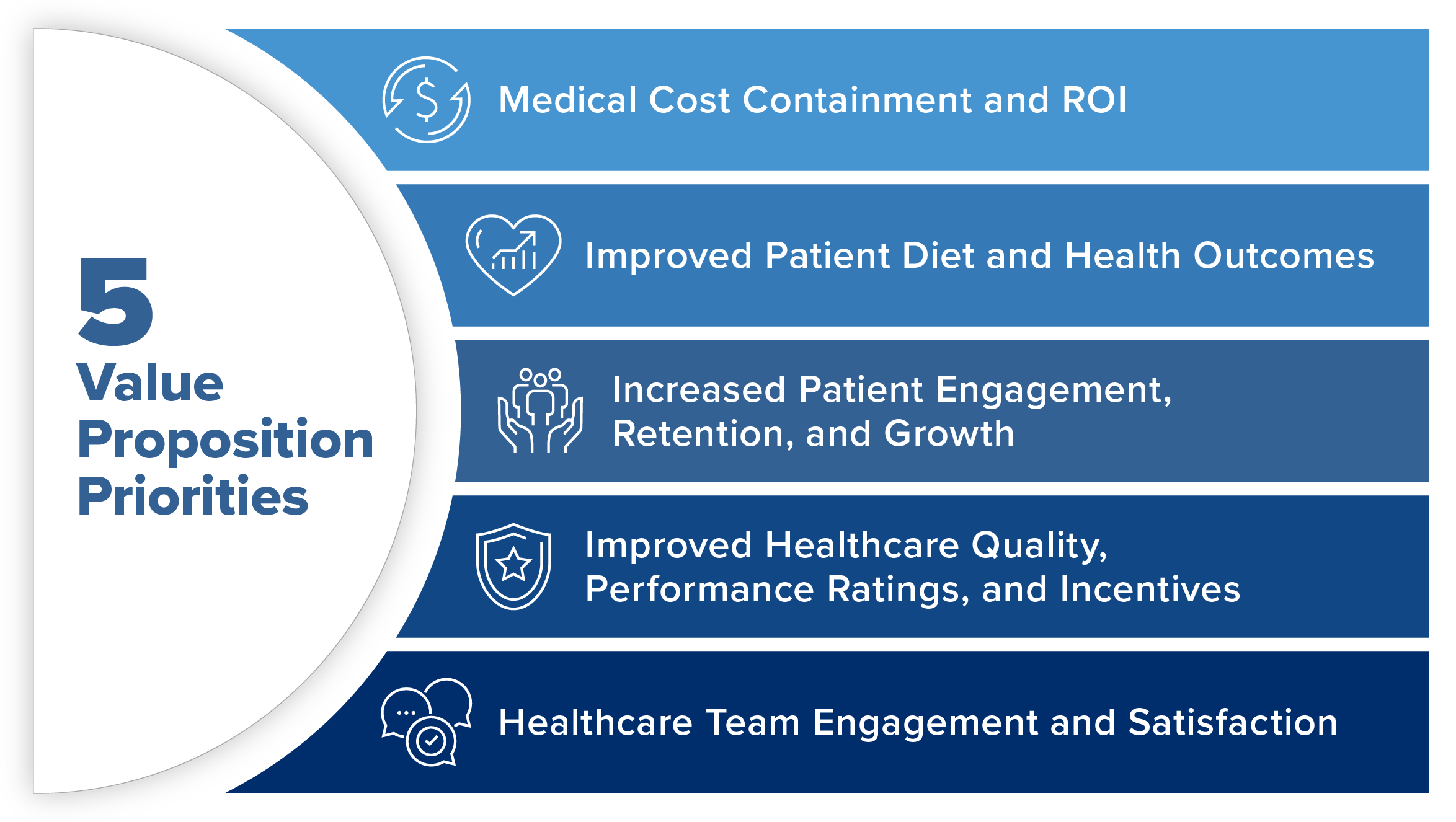
Health plans invest in population health to improve outcomes while remaining affordable and competitive. Rather than raising premiums, they look to fund these investments by reducing avoidable medical spending. As a result, financial return on investment (ROI) is central to how population health programs are evaluated, for both for-profit and nonprofit plans. Lower medical costs can also improve affordability for uninsured and underinsured individuals, as well as for employers and other purchasers.
FIM aligns with this approach because it addresses a major driver of medical spending: diet-related chronic disease. By improving access to nutritious food earlier, these programs help prevent complications that lead to emergency visits, hospitalizations, and higher pharmacy costs. For some patients with diabetes, it leads to remission. In this way, sustaining a healthy diet improves health.
As health improves, engagement improves. Food-based interventions are practical and relevant to daily life, helping build trust and strengthen relationships between patients and care teams. This, in turn, supports retention and continuity of care.
Improved health and engagement also support quality performance. Many quality measures are directly influenced by nutrition and chronic disease management, making FIM a lever for improving ratings, incentives, and public reporting.
Finally, FIM supports the care workforce by giving clinicians and health care administrators meaningful tools to address root causes, not just symptoms, and to deliver care in a way that feels aligned with the purpose of health care.
Priorities for Incorporating FIM into Health Care
The following domains represent priority areas for payers that are considering FIM interventions within their lines of business. The section below describes how FIM addresses each priority.
1. Medical Cost Containment and ROI
Reduces health care utilization with research showing lower hospital admissions, ED visits, and readmissions among members with chronic disease or food insecurity within a one-year window. This is especially true for the highest risk/highest cost populations.
Improves medication adherence among members who completed companion diabetes education or health coaching programs.
When FIM is deployed for populations with general risk, it serves as a preventive investment, addressing root causes of diet-sensitive conditions before they escalate into costly medical conditions.
2. Improved Patient Diet and Health Outcomes
Reduces nutrition insecurity as patients consistently access adequate levels of healthy food to support the management and treatment of chronic health conditions.
Improves chronic disease indicators on a range of disease-specific indicators, including improvement in HbA1c or glucose management, blood pressure, weight/BMI, mental health, as well as prenatal, maternal, and birth outcomes.
Section 1.5: Evidence of the impact of FIM ▶
What are the outcomes health plans should measure to identify if the specific FIM intervention model is producing measurable improvements for key target population needs?
When allocating program dollars, payers must decide what matters most based on organizational goals, the population profile, and budget constraints.
- If maximizing the per-member health impact is the goal, then providing the plan’s highest-need members with several months’ worth of MTM may be the optimal route.
- If reaching a broader group of members with a less intensive intervention for improved metabolic or mental health, then more scalable approaches, such as MTG or PRx, and digital nutrition support may be a better fit, allowing for broader reach at a lower per-member cost.
3. Increased Patient Engagement, Retention, and Growth
Enhances retention and brand reputation in competitive markets by showing the plan’s commitment to holistic care.
Cultural and community relevance as partnering with local food providers and culturally tailored nutrition services may resonate deeply with diverse member populations.
Strengthens employer and patient trust through visible, values-driven leadership.
What are operational strategies for health plans to improve member satisfaction, retention, and plan growth through FIM programs?
Meeting consumer demand for better nutrition through FIM can boost member satisfaction and help plans retain members by increasing the perceived value of coverage, especially among those managing chronic conditions or facing food insecurity. National surveys indicate strong consumer interest in participating in FIM programs, with many adults expressing a desire for these services to be covered by their health insurance.
4. Improved Health Care Quality Performance Ratings and Incentives
Improves member experience as assessed by the Consumer Assessment of Healthcare Providers and Systems (CAHPS) survey which influence overall Star Ratings for Medicare Advantage.
Enhances value-based care outcomes by supporting providers and plans in meeting quality benchmarks tied to shared savings or performance bonuses (e.g., clinical quality metrics that are part of Medicare Advantage Star Ratings and Medicaid quality frameworks, or quality withhold measures in Medicare and Medicaid managed care).
Supports state and federal program goals such as Make American Healthy Again (MAHA) policy priorities, CMMI models, Medicaid 1115 demonstration waivers, and state policy initiatives to integrate nutrition-based interventions within state approved benefit requirements.
How can FIM interventions support health plan performance improvement related to clinical and quality measures?
FIM programs provide a pragmatic approach for health plans to enhance performance across many quality metrics. The table below demonstrates how FIM interventions are aligned to and can improve key clinical and quality measures for health plans.
What it Measures:
- A1c control
- BP control
- Eye exams
- Kidney exams
How FIM Can Improve Key Measures:
- Improved diet → greater chronic disease control
- Increased touchpoints → more care completion
What it Measures:
- Food insecurity
- SDOH needs
- Referral closure
How FIM Can Improve Key Measures:
- Reduces/eliminates food insecurity
- Creates closed-loop documentation
What it Measures:
- Access to care
- Service experience
- Care coordination
- Plan rating
How FIM Can Improve Key Measures:
- Member reports greater support
- Member reports reduced stress
- Member reports improved care navigation
5. Employee Engagement and Satisfaction
Reduces provider “moral injury”—the distress caused by being unable to help patients meaningfully through conventional care— and burnout by giving providers an effective and well-liked tool for health promotion.
Supports increased knowledge of nutrition and integrated care team relationships to support connection to FIM services.
A Provider’s Perspective on FIM
After a decade in traditional primary care, Dr. Jaclyn Lewis Albin found herself confronting a familiar frustration: not enough time and not enough continuity to help her patients make lasting changes. Despite additional training in culinary and lifestyle medicine, the structure of routine visits made it difficult to address the real drivers of health. Integrating culinary medicine and Food is Medicine into clinical care created a novel opportunity to help.
As she puts it:
“In a shared medical appointment, I finally have enough time to understand real barriers and work through solutions with patients and my culinary dietitian partner. We solve things together, and that restores hope through nourishing, delicious food. After many lonely years of pushing this work forward, it feels like we’re reaching a tipping point. The momentum across clinical care, education, and policy is energizing. This is the kind of healing and empowerment I went into medicine and public health to support.”
Dr. Jaclyn Lewis Albin
Director and Certified Culinary Medicine Specialist, Culinary Medicine Program, UT Southwestern Medical Center
Medical Director, Food is Medicine Innovation, Center for Innovation and Value, Parkland Health
FIM Opportunities by Major Business Line ▶
◀ Why Health Care Needs a FIM Value Proposition