

After FIM program design and structure decisions have been made, the next step is integration of FIM activities within the clinical workflow. Clinical workflows that support effective FIM programs are:
- Embedded within existing care pathways (i.e., patient screening for food/nutrition insecurity and social risks)
- Informed by patient needs and preferences (i.e., diagnostic criteria, patient readiness)
- Supported by technology and personnel to be minimally burdensome for health care providers and clinical staff (i.e., flagged in EHR systems)
- Coordinated across clinical and community partners (i.e., referral, enrollment, and delivery within clinical teams and to external vendors)
- Monitored for outcomes data and opportunities for continuous quality improvement (i.e., utilization data, clinical and social health metrics)
Management leaders can support the successful integration of FIM programs within the clinical workflow by establishing standardized processes, engaging the right personnel within clinical teams, and supporting teams and patients with necessary technology and infrastructure. As we will cover in Section 6, ongoing evaluation can affirm program successes and identify areas for improvement.
Section 6.1: Building a Dynamic Evaluation and Learning Culture ▶
Together, program managers and frontline clinicians can support patients with diabetes in FIM programs across the clinical workflow, as demonstrated below.
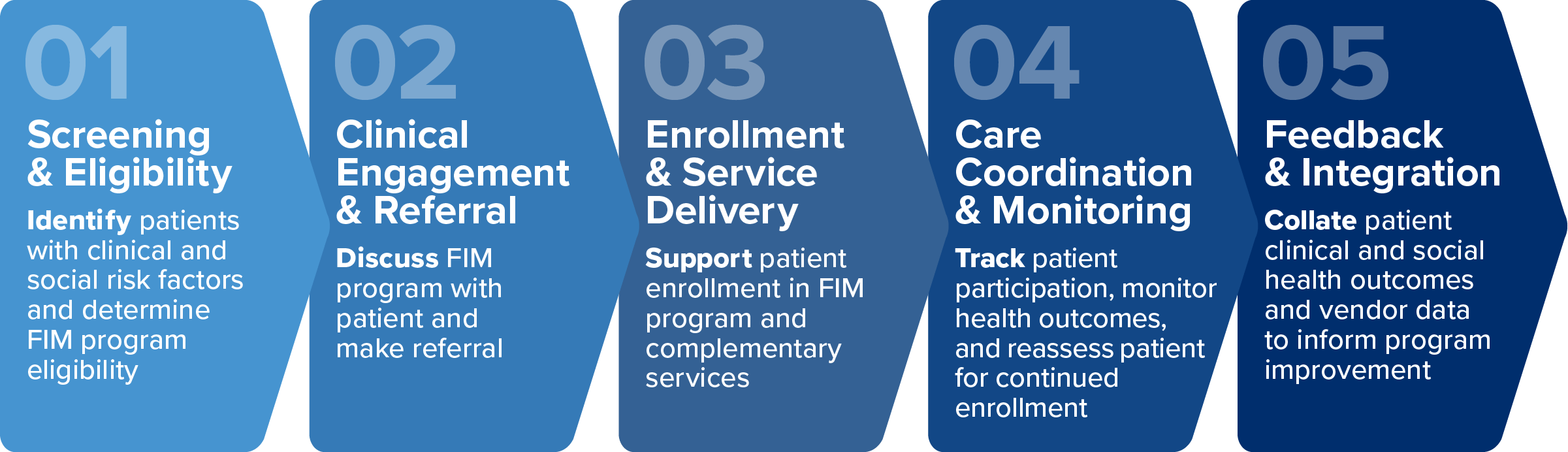

Explore Implementation Considerations:
The following chapters outline the minimum essential elements needed to implement a FIM program, along with additional considerations, resources, and tools.